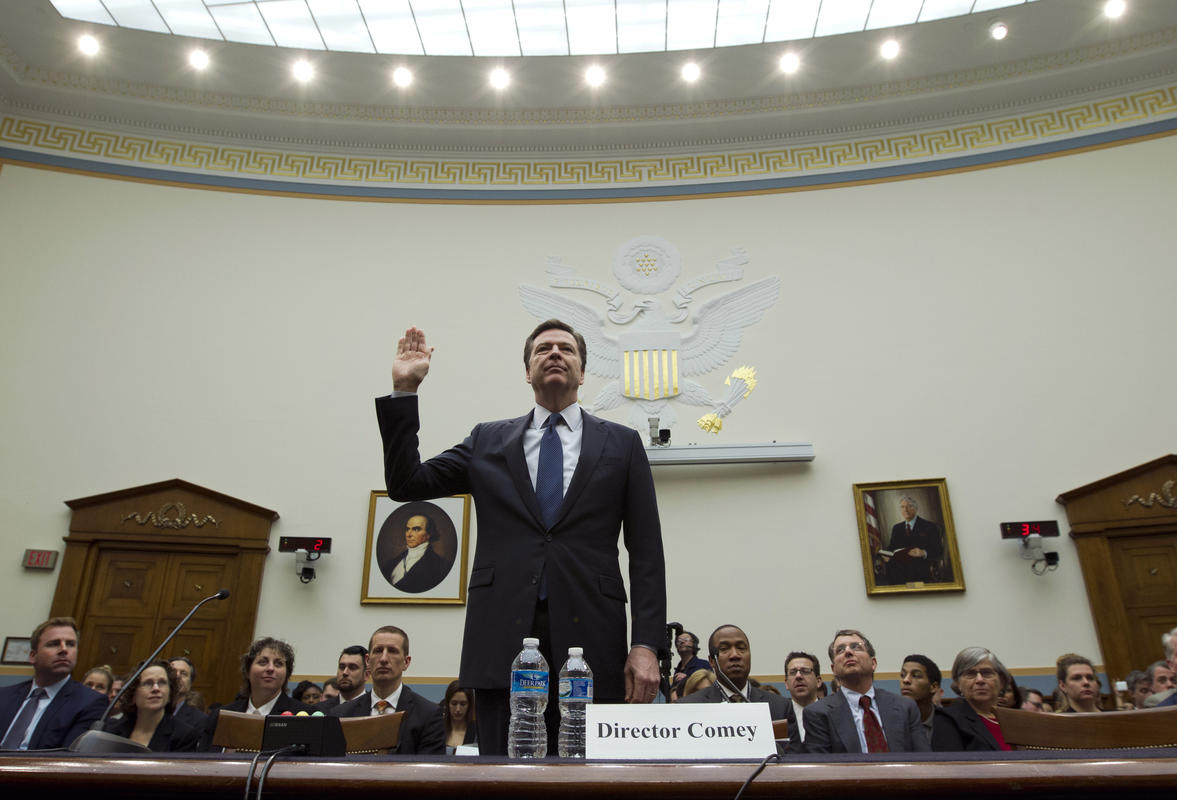
This week Apple and the FBI have presented its case for maintaining the strength of its encryption to an audience that may ultimately have the final say: Congress. 9 to 5 Mac summarized the main points from each side during the 5 hours of testimony.
FBI #1: ‘Warrant-proof spaces’
The FBI asked whether it is reasonable that Apple be allowed to create environments that cannot be penetrated by the government even when it comes armed with a search warrant.
FBI testimony
FBI #2: Costs to society
The FBI points out that allowing a cooperation to decide something like this would come at a cost to society.
FBI #3: Ancient law still valid today
Even though the All Writs Act is old the Constitution is older, and it’s still a pretty good document.
FBI #4: No other way to get the data
The FBI denied that the government possessed the means to access the iPhone without Apple’s help.
FBI #5: Apple hasn’t suggested a way forward
A member of the congressional committee, Rep. Jim Sensenbrenner, noted that while Apple has agreed there is a balance to be struck here between privacy and law enforcement, the company hasn’t put forward any suggestion as to how this balance might best be achieved.
Apple’s testimony
Apple #1: This could never be undone
Apple legal counsel hammered home the point that this is a one-way street – once the tool has been invented, it cannot be uninvented.
Apple #2: It wouldn’t just affect older iPhones
The tool Apple’s being asked to create will work on any iPhone in use today.
Apple #3: The tool could fall into the wrong hands
Once the tool exists, there is always the risk that it would get into the wrong hands
All it takes for things to go badly wrong is a bit of neglect in the process or the collaboration of a rogue employee.
Apple #4: We all have legitimate things to hide
The Apple legal team demolished the suggestion that only criminals and terrorists with things to hide have anything to fear.
They pointed out that smartphones are increasingly becoming like wallets, providing access to accounts (not only financial, but also various online accounts, such as Dropbox), and storing emails and notes, including ones from meetings or design drawings and the like.
Apple #5: Repressive regimes will want it too
Once the U.S. government has been given access to a master key, other governments around the world will demand the same.
Apple #6: The FBI doesn’t need Apple’s help in such cases
Apple pointed out that it wasn’t true that the government had no way to access the iPhone without Apple’s help. They described the chip de-capping technique pointed to by Edward Snowden, and that the NSA may have capabilities the FBI doesn’t.
Apple #7: This would breach both First and Fifth Amendments
Compelling Apple to write code against its will was a violation of both First and Fifth Amendments. The Supreme Court has already recognized computer code as protected speech under the First Amendment, and the Fifth Amendment protects Apple against coercion.



Welcome to episode 167 of Geek Bytes Podcast.
I’m Ramon Mejia and I’m Edgardo Acosta
Every podcast we bring you the roundup of the week’s best Geek and Tech news, then we discuss that news and anything else we’re interested in that week.
In Geek News this week, we’ll talk about video game news, Batman’s penis, PG-13 Deadpool, tons of superhero casting news, movie trailer showdown and more...
That’s it for the show
If you like the podcast and want to help support us you can find out all the ways to do so at geekbytespodcast.com/support
Thanks for watching and listening.
For the Geek Bytes Podcast I’m Ramon Mejia and I’m Edgar Acosta. Now Go Geek out about something.
(Music 9)
Music Credits
"Happy Bee", "Movement Proposition", "Theme for Harold (var.3) ", "Take the Lead"
Kevin MacLeod (incompetech.com)
Licensed under Creative Commons: By Attribution 3.0
http://creativecommons.org/licenses/by/3.0/